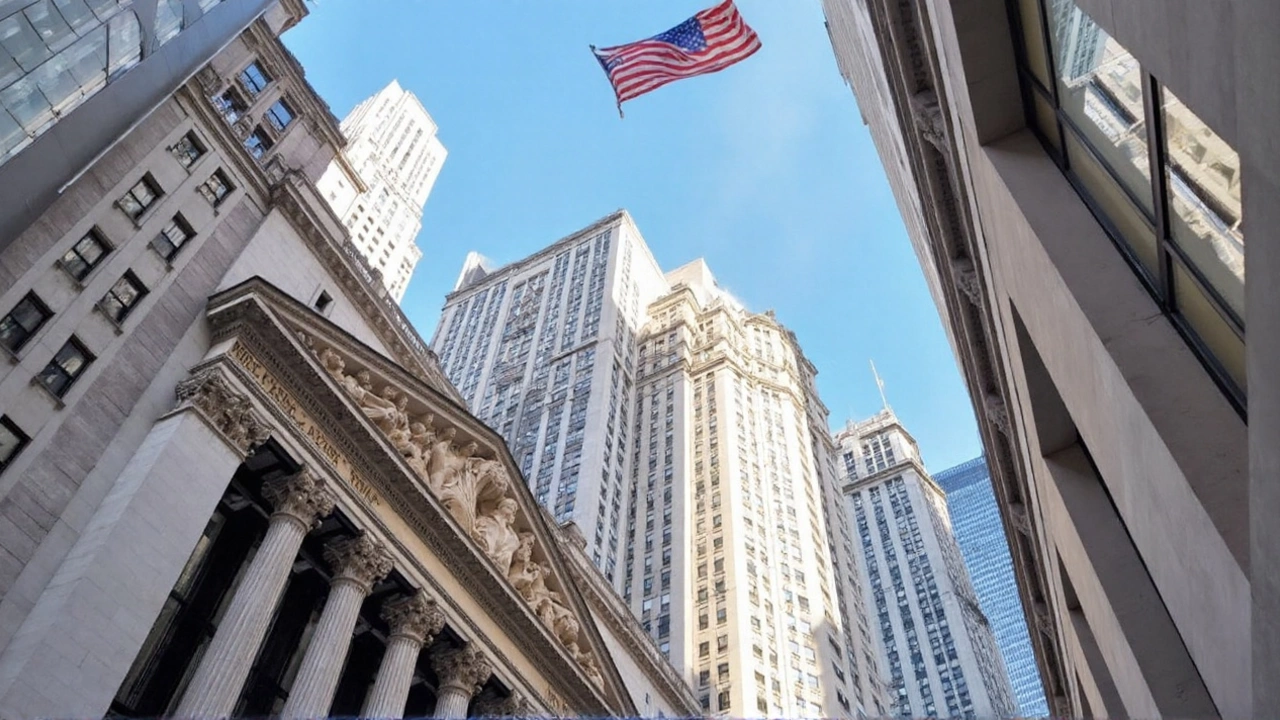
Financial Markets Overview
When navigating Financial Markets, the arena where stocks, bonds, commodities and currencies are bought and sold. Also called capital markets, it shapes the economy in real time. A key driver right now is Dow Futures, contracts that bet on the future value of the Dow Jones Industrial Average. Traders also watch the Federal Reserve, the U.S. central bank that sets monetary policy for clues on rate changes. Meanwhile, the latest US‑China Trade Talks, diplomatic negotiations that affect tariffs and global supply chains are adding another layer of uncertainty.
Key Drivers Shaping Today's Market Moves
Financial Markets aren’t just numbers on a screen; they react to policy, earnings and geopolitical shifts. Stock index futures such as the Dow, S&P 500 and Nasdaq act like a barometer, flashing early signals before the regular bell rings. When the Fed hints at a 25‑basis‑point cut, futures often climb a bit, reflecting optimism that cheaper money will boost corporate profits. Conversely, mixed earnings reports can pull the same contracts in opposite directions, creating short‑term volatility that day traders love to exploit.
Another piece of the puzzle is the triple‑witching hour that hits at 3 p.m. EST. That’s when stock, index and options contracts expire together, squeezing liquidity and often triggering sharp, short‑lived swings. Investors who understand how triple‑witching amplifies price moves can time entries and exits more precisely, especially when it coincides with a Fed meeting or a major trade announcement.
US‑China trade negotiations deserve a spotlight of their own. Each round of talks can alter tariffs on everything from steel to smartphones, reshaping profit margins for multinational firms. When talk turns positive, risk‑on sentiment spreads, lifting not just tech stocks but also commodities tied to global demand. When talks stall, safe‑haven assets like the U.S. dollar and gold see inflows, pulling equity futures lower.
Rate‑cut expectations are a constant thread in this tapestry. The Fed’s dual mandate—price stability and maximum employment—means it watches inflation data like a hawk. If inflation eases, the central bank may lower rates, which usually fuels a rally in equities and pushes futures higher. But if inflation looks sticky, the Fed could hold rates steady or even hike, sending futures tumbling as borrowing costs rise.
For the everyday investor, these dynamics translate into actionable insights. Monitoring Dow Futures gives a real‑time snapshot of market sentiment before the opening bell. Keeping tabs on Fed statements helps you anticipate interest‑rate moves that affect everything from mortgage rates to corporate borrowing costs. Finally, staying updated on trade talks alerts you to potential sector‑wide shifts—think automotive or tech—that could affect your portfolio’s weightings.
Below, you’ll find a curated set of articles that break down each of these elements in plain language. Whether you’re watching the Dow futures tick up ahead of a Fed meeting, trying to decode the impact of the latest US‑China trade round, or simply want a quick read on what triple‑witching means for your trades, the collection has you covered. Dive in to see how these forces intertwine and what they mean for your next move in the market.